
Watsonia borbonica (Pourr.) Goldblatt
pink watsonia · suurkanol, kanolpypie (Afr.)
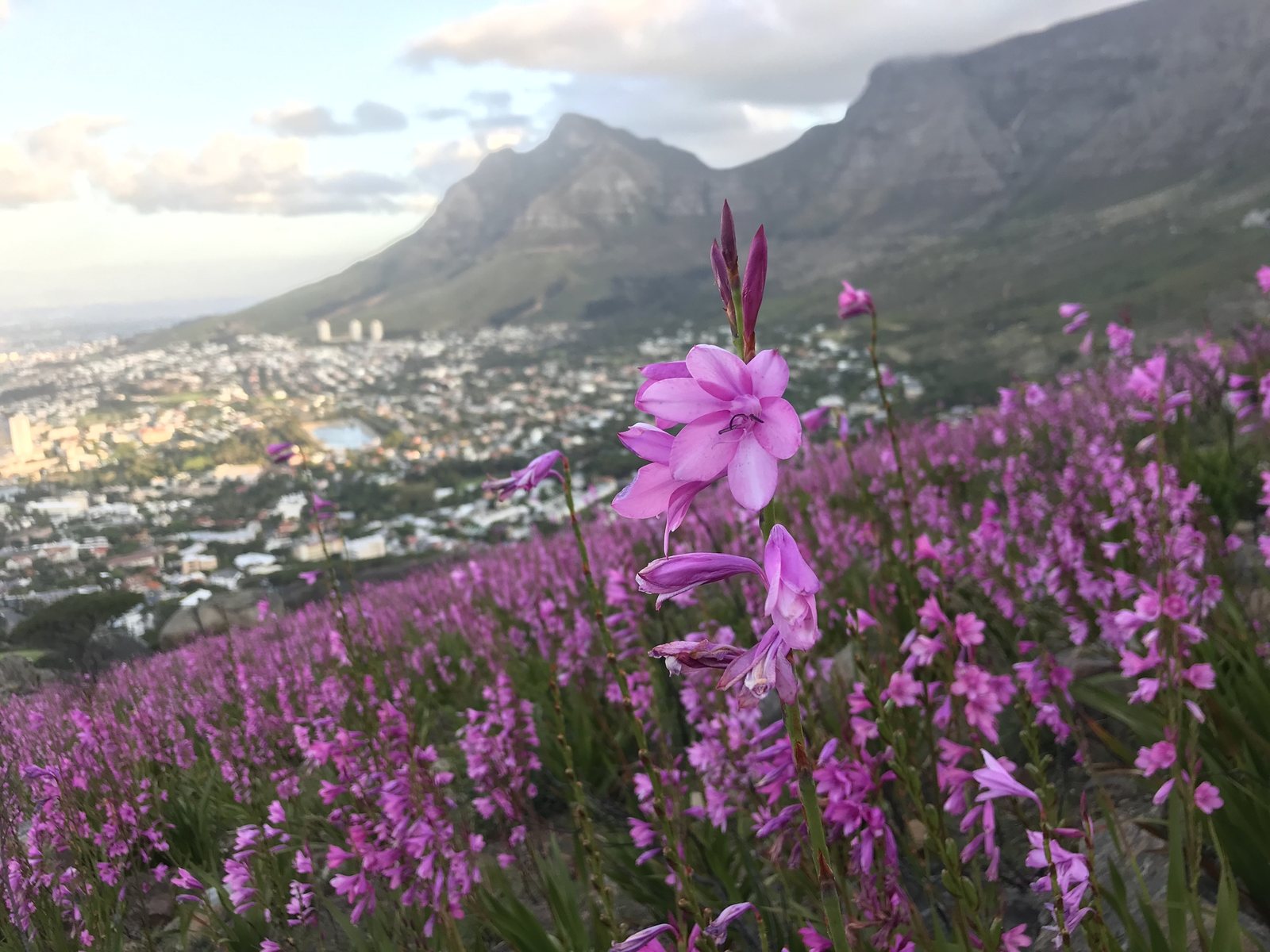
Tall winter-growing watsonia with spikes of rose-pink trumpets for 4–5 weeks in late spring.
What’s in the name: Watsonia: honours William Watson, an 18th-century English apothecary and naturalist; borbonica: "from Bourbon" (Réunion), a mistaken idea of where it came from.
“Fair Daffodils, we weep to see You haste away so soon”
— Robert Herrick, To Daffodils – Palgrave, The Golden Treasury (1861), Project Gutenberg
Available from AVNPlants: see the availability list.
Family
Iridaceae
Conservation status
Least Concern, SANBI Red List of South African Plants (assessed as Watsonia borbonica (Pourr.) Goldblatt subsp. borbonica)
Natural distribution & habitat
Extreme south-west of the Western Cape, from Tulbagh to the Cape Peninsula and east to Bredasdorp, on rocky sandstone or well-drained clay and granite slopes.
Size & form
Deciduous corm up to 2 m tall in flower, with fans of glossy, broad sword-shaped leaves; dormant in summer.
Flowering
October to early December, sometimes into January.
Uses in landscaping
- Mass planting and clumps in borders
- Waterwise winter-rainfall gardens
- Large containers
Care notes
Full sun, well-drained composted soil. Feed lightly with a potash-rich (ideally organic) fertiliser in the growing season – too much gives leaves, not flowers. Handles mild frost; lift in very cold areas. Divide every 3–5 years. Keep potted plants dry when dormant.
Wildlife value
Pollinated by large solitary bees; after fire it is an important food plant – nectar for insects and birds, seed for rodents.
Find out more
Facts checked against: SANBI PlantZAfrica species page 'Watsonia borbonica'; SANBI Red List of South African Plants, Watsonia borbonica (Pourr.) Goldblatt subsp. borbonica (assessment 2006/09/17).