
Tulbaghia violacea Harv.
wild garlic, society garlic · wildeknoffel, wildeknoflok (Afr.)
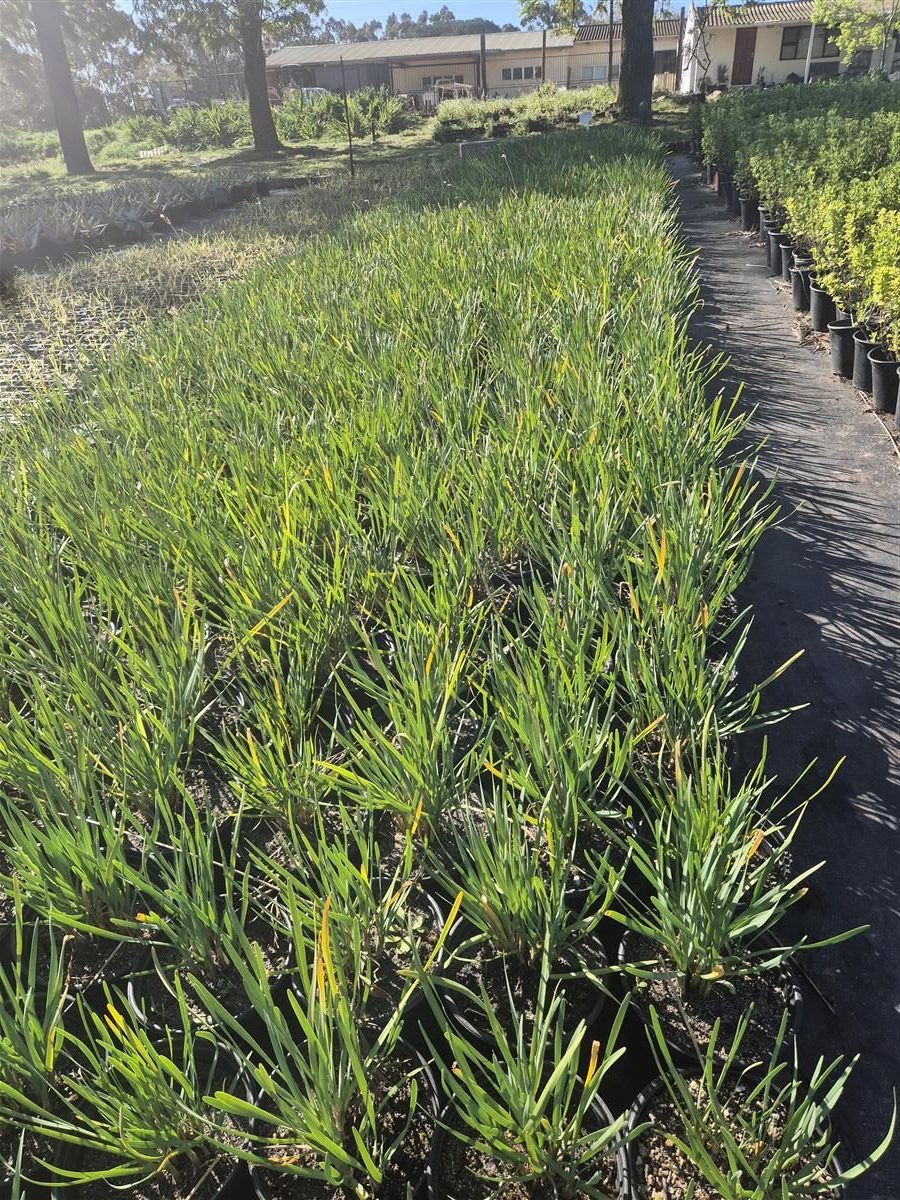
Tough, drought-tolerant clumping bulb with mauve flower heads (violacea means "violet") through summer; garlic-scented leaves.
What’s in the name: Tulbaghia: honours Ryk Tulbagh, an 18th-century governor of the Cape; violacea: "violet".
“whatsoever a man soweth, that shall he also reap.”
— Galatians 6:7 (KJV), The King James Version of the Bible (Project Gutenberg)
Available from AVNPlants: see the availability list.
Family
Amaryllidaceae
Conservation status
Least Concern (LC), per PlantZAfrica
Natural distribution & habitat
Eastern Cape, KwaZulu-Natal and Limpopo, north to Zimbabwe.
Size & form
Fast-growing, clump-forming bulbous plant to about 0.5 m. Narrow, strap-like, slightly fleshy leaves that smell of garlic when bruised, from fat tuberous roots.
Flowering
Summer, over a long period (January to April): umbels of up to 20 pinkish-mauve tubular flowers on tall stalks.
Uses in landscaping
- Waterwise: tolerates prolonged drought and difficult hot corners, but flourishes with regular watering
- Edging along paths, rockeries, and mass planting as groundcover in sun or part shade
- Herb garden: leaves and flowers are edible
- Good container plant
Care notes
Easy; grows in most soils, best in well-drained soil with plenty of compost. Propagate by seed (sow in spring) or division; leave divided clumps undisturbed. Seldom troubled by pests, but slugs and snails can damage the foliage.
Wildlife value
Day-scented flowers, likely pollinated by butterflies and bees (listed as attracting butterflies and feeding honeybees).
Find out more
Facts checked against: SANBI PlantZAfrica species page 'Tulbaghia violacea'.