
Tecomaria capensis (Thunb.) Spach
formerly Tecoma capensis
Cape honeysuckle, tecomaria · Kaapse kanferfoelie, trompetters (Afr.)
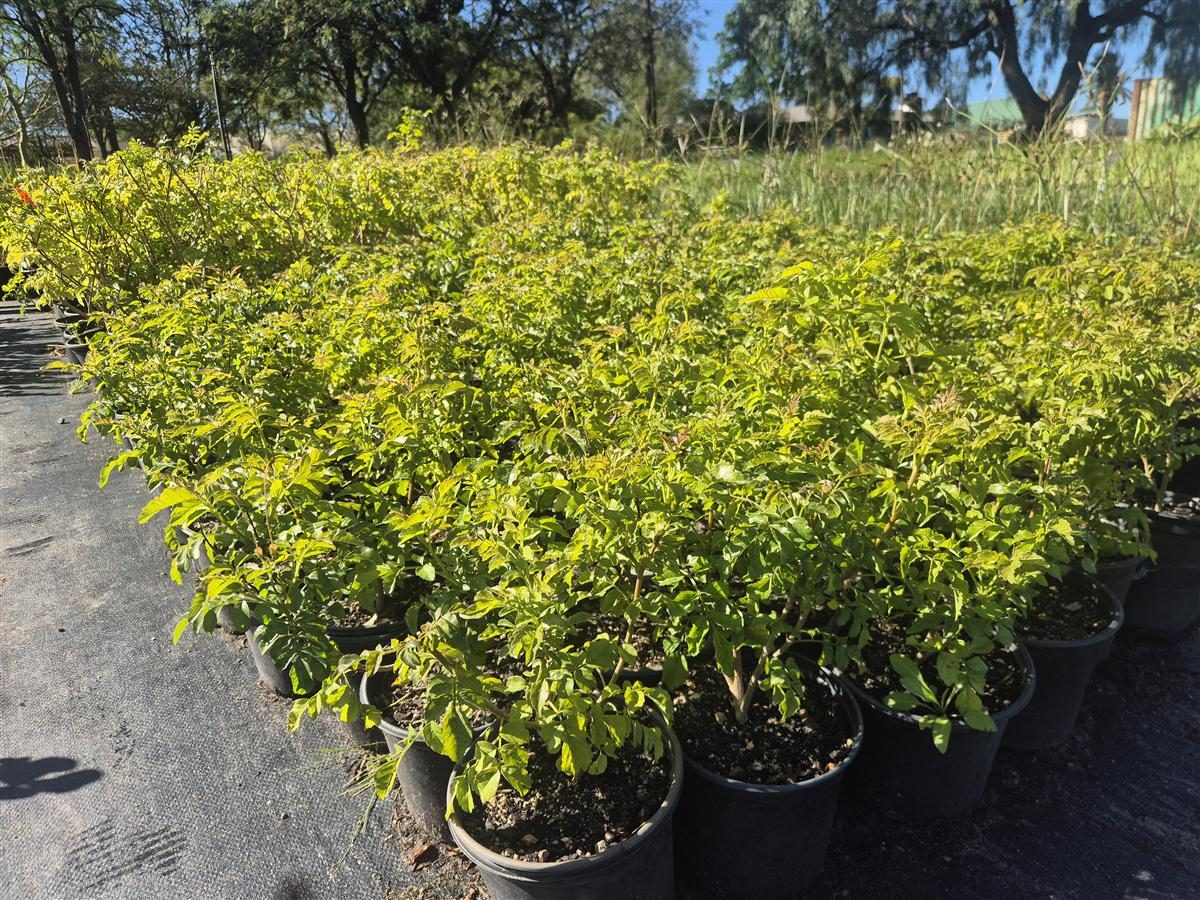
Fast, scrambling Cape honeysuckle with orange (also yellow or red) tubular flowers; screens and hedges.
What’s in the name: Tecomaria: "like Tecoma", a name rooted in a Nahuatl (Aztec) plant name; capensis: "from the Cape".
“I am large, I contain multitudes.”
— Walt Whitman, Song of Myself – Walt Whitman, Leaves of Grass, Project Gutenberg
Available from AVNPlants: see the availability list.
Family
Bignoniaceae
Conservation status
Least Concern (LC).
Natural distribution & habitat
Limpopo, Mpumalanga, the KwaZulu-Natal and Eastern Cape coasts, Eswatini and Mozambique, in bush and scrub and sometimes forest edges.
Size & form
Scrambling, multi-stemmed shrub 2–3 m high and over 2.5 m wide.
Flowering
Erratic; often through the year.
Uses in landscaping
- Screens, formal or informal hedges
- Waterwise gardens – very drought tolerant
Care notes
Sun to semi-shade. Prune in late winter for fresh growth and flowers. Protect young plants from frost. Very easy from cuttings or rooted suckers in the growing season.
Wildlife value
Pollinated by sunbirds and other nectar-feeding birds; bees and butterflies visit, and game browse the leaves.
Find out more
Facts checked against: SANBI PlantZAfrica species page 'Tecomaria capensis'.