Searsia crenata (Thunb.) Moffet
formerly Rhus crenata
dune crow-berry · duinekraaibessie (Afr.)
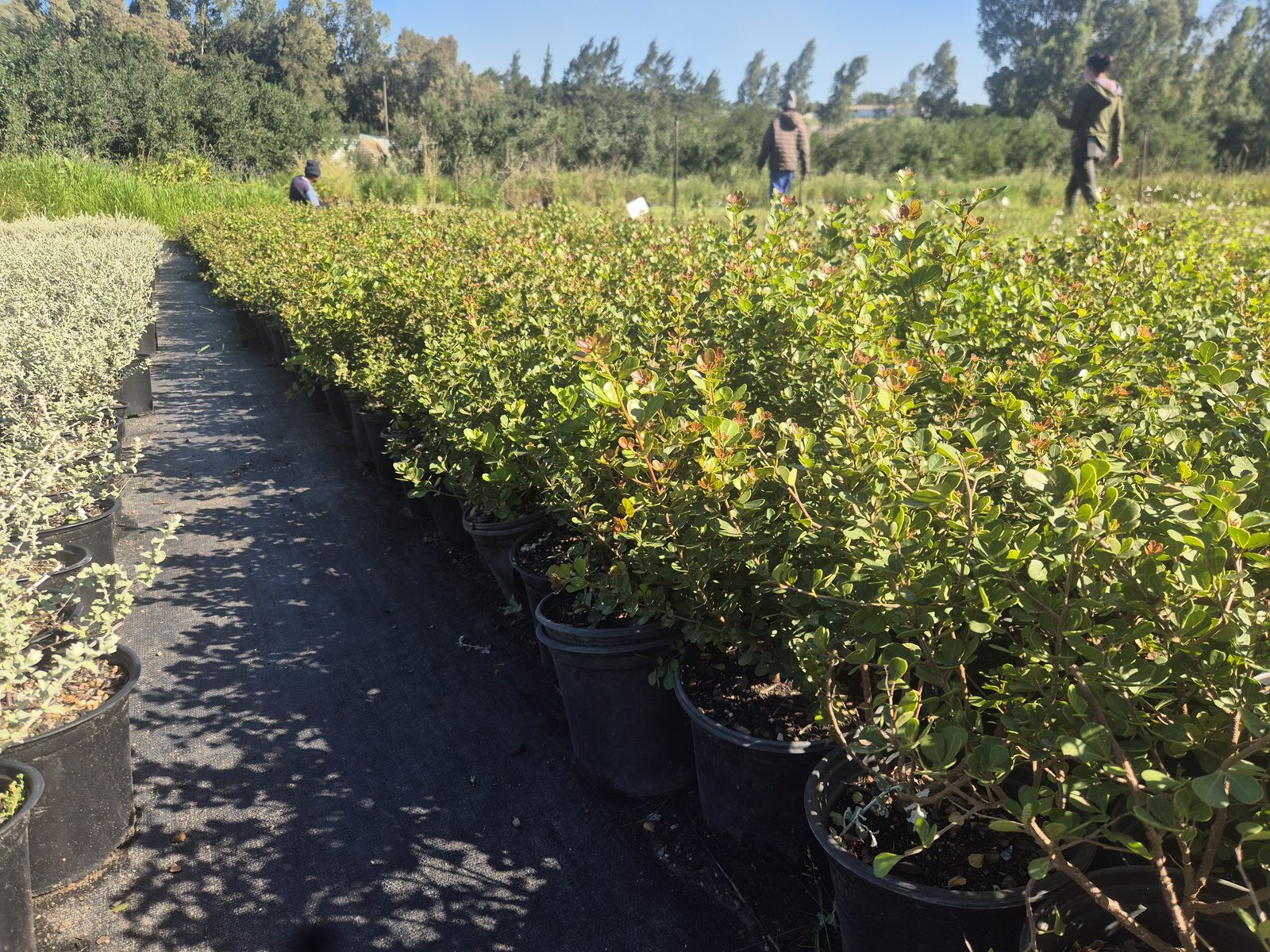
Tough, spineless dune shrub for coastal windbreaks and sand-binding; drought tolerant.
What’s in the name: Searsia: honours Paul Sears, an American ecologist; crenata: "scalloped".
“make her wilderness like Eden”
— Isaiah 51:3 (KJV), The King James Version of the Bible (Project Gutenberg)
Available from AVNPlants: see the availability list.
Family
Anacardiaceae
Conservation status
Least Concern, SANBI Red List of South African Plants
Natural distribution & habitat
Dense colonies on coastal and inland dunes between the Cape Peninsula and Umzumbe (southern KZN).
Size & form
Evergreen shrub or small tree 3–5 m, with small leathery three-part leaves.
Flowering
Autumn: small white to cream clusters.
Uses in landscaping
- Coastal windbreak and dune stabilisation
- Drought-tolerant hedge or screen
- Well-drained containers
Care notes
Sandy soil. Shape and height can be controlled by pruning. Roots from cuttings in a bark–sand mix.
Wildlife value
Birds eat the fruit; many butterflies breed on Searsia species.
Find out more
Facts checked against: SANBI PlantZAfrica species page 'Searsia crenata'; SANBI Red List of South African Plants, Searsia crenata (Thunb.) Moffett (assessment 2018/11/06).