Salvia lanceolata Lam.
rusty sage, lance-leaf sage · rooisalie (Afr.)
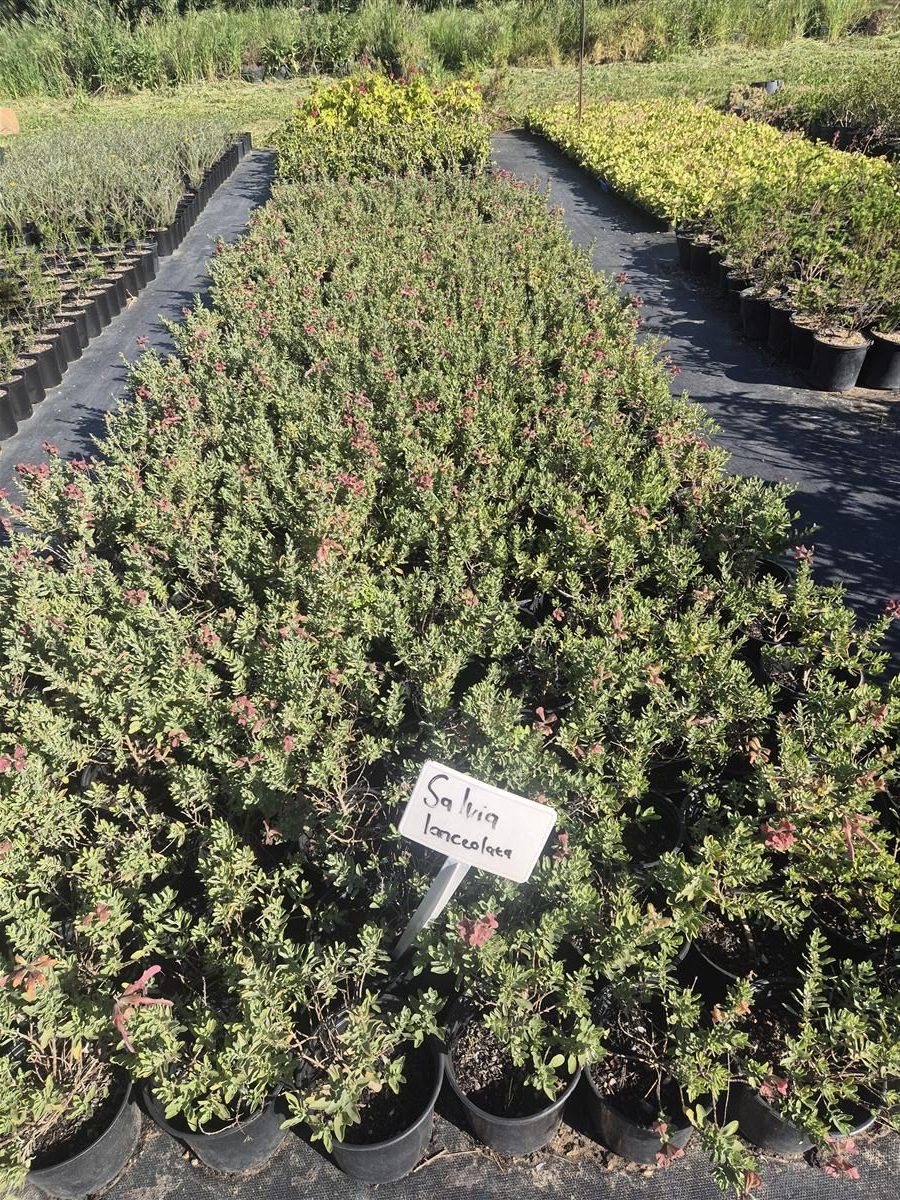
Easy, waterwise grey-green sage with rusty-rose flowers for most of the year.
What’s in the name: Salvia: from the Latin "to heal", for the sages' long medicinal use; lanceolata: "lance-shaped".
“Nature always wears the colors of the spirit.”
— Ralph Waldo Emerson, Nature – Ralph Waldo Emerson, Nature (1836), Project Gutenberg
Available from AVNPlants: see the availability list.
Family
Lamiaceae
Conservation status
Least Concern, SANBI Red List of South African Plants
Natural distribution & habitat
Fynbos on coastal sands and limestone, and rocky hillsides, between the Peninsula, Montagu and Namaqualand.
Size & form
Fairly fast, upright shrub up to 2 m, with square stems becoming woody. Flowers 25–35 mm, rusty red to dull rose or greyish blue.
Flowering
September to June.
Uses in landscaping
- Fynbos, coastal and waterwise gardens
- Specimen or informal shrub border
- Containers, rockeries, verges and slopes; herb gardens
Care notes
Full sun and good drainage; don't overwater once settled. Prune lightly to keep it bushy, and add compost or mulch. Resprouts after frost. Seed or cuttings.
Wildlife value
Bee-pollinated, like many salvias.
Find out more
Facts checked against: SANBI PlantZAfrica species page 'Salvia lanceolata'; SANBI Red List of South African Plants, Salvia lanceolata Lam. (assessment 2005/06/30).