Salvia aurea L.
formerly Salvia africana-lutea
golden sage, beach sage · bruinsalie, strandsalie (Afr.)
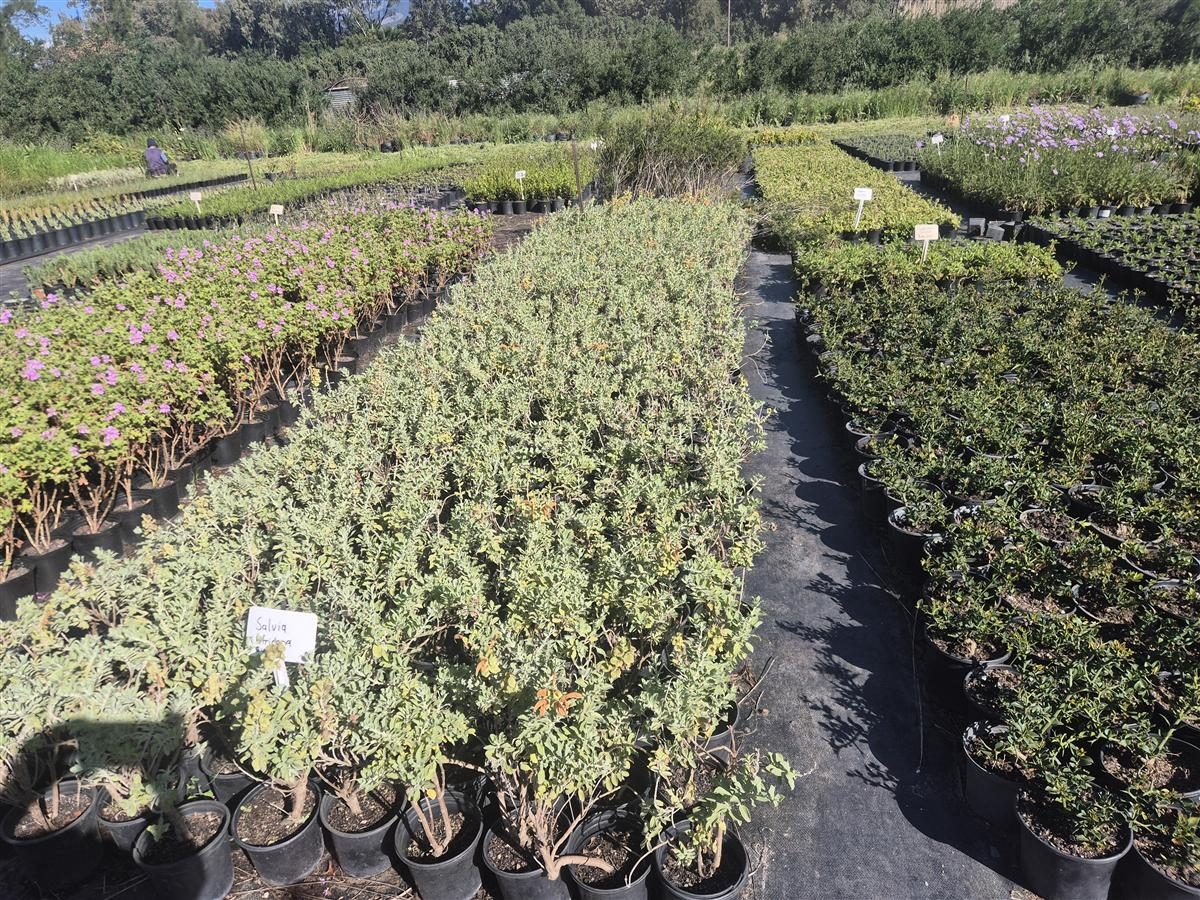
Aromatic, wind- and drought-tolerant coastal shrub with yellow-to-rusty-brown flowers loved by sunbirds.
What’s in the name: Salvia: from the Latin "to heal", for the sages' long medicinal use; aurea: "golden".
“The flowers appear on the earth; the time of the singing of birds is come”
— Song of Solomon 2:12 (KJV), The King James Version of the Bible (Project Gutenberg)
Available from AVNPlants: see the availability list.
Family
Lamiaceae
Conservation status
Least Concern, SANBI Red List of South African Plants
Natural distribution & habitat
From the Namaqualand coast to the Cape Peninsula and east to Port Alfred; usually near the sea, often common on coastal sand dunes.
Size & form
Fairly fast-growing aromatic shrub up to 2 m, with greyish-green aromatic leaves.
Flowering
Mainly from early spring, over a long period (sporadic through the year). Bright yellow flowers (aurea means "golden") fade to rusty-orange then reddish-brown; the papery calyx persists.
Uses in landscaping
- Waterwise and coastal gardens: tolerates strong wind and drought
- Rockeries and informal shrub borders
- Wildlife and pollinator gardens
- Good container plant
Care notes
Easy. Full sun, light well-drained soil; water well and mulch for stronger growth. Resprouts from the rootstock after frost, but give it a warm sheltered spot in frosty areas. Prune to keep shapely; replace after about five years as it gets woody. Propagate from stem cuttings or seed in spring.
Wildlife value
Nectar-rich flowers feed sunbirds (especially when proteas are not flowering), bees and moths; salvias are larval host plants for some blue and bronze butterflies.
Find out more
Facts checked against: SANBI PlantZAfrica species page 'Salvia aurea'; SANBI Red List of South African Plants, Salvia aurea L. (assessment 2023/08/29).