Salvia africana L.
formerly Salvia africana-caerulea
blue African sage, blue sage · blousalie, bloublomsalie (Afr.)
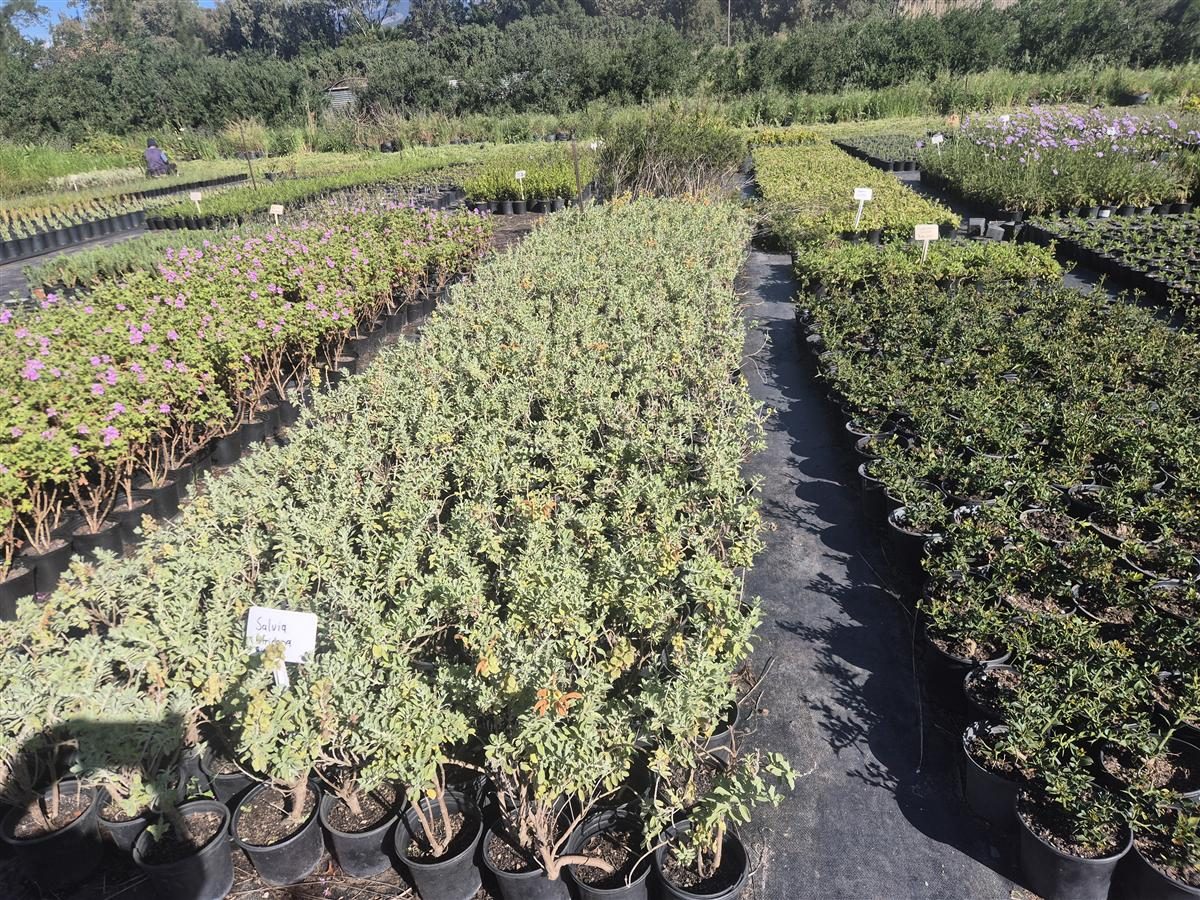
Soft, grey, aromatic fynbos sage with blue-mauve flowers from winter to summer; a waterwise herb-garden shrub. AVNPlants grows the cultivar 'Sunset'.
What’s in the name: Salvia: from the Latin "to heal", for the sages' long medicinal use; africana: "African".
“He causeth the grass to grow for the cattle, and herb for the service of man”
— Psalm 104:14 (KJV), The King James Version of the Bible (Project Gutenberg)
Available from AVNPlants: see the availability list.
Family
Lamiaceae
Conservation status
Least Concern, SANBI Red List of South African Plants
Natural distribution & habitat
Sandy slopes and flats in fynbos from Namaqualand to the Cape Peninsula and Caledon.
Size & form
Soft, hairy, much-branched grey shrub up to 2 m.
Flowering
June to January, peaking August to December, in whorls at the stem tips.
Uses in landscaping
- Waterwise and fynbos gardens
- Herb gardens
- Texture and colour contrast in mixed beds
Care notes
Full sun, well-drained soil. Water until established, then sparingly – it dislikes waterlogging. Frost-hardy to roughly −5 °C and grows on the Highveld. Seed or cuttings; feed young plants with organic fertiliser.
Wildlife value
Bee-pollinated: a hinged anther mechanism dusts landing bees with pollen.
Find out more
Facts checked against: SANBI PlantZAfrica species page 'Salvia africana'; SANBI Red List of South African Plants, Salvia africana L. (assessment 2022/07/19).