
Plecostachys serpyllifolia (P.J.Bergius) Hilliard & B.L. Burtt
cobwebbush · vaaltee, kooigoed (Afr.)
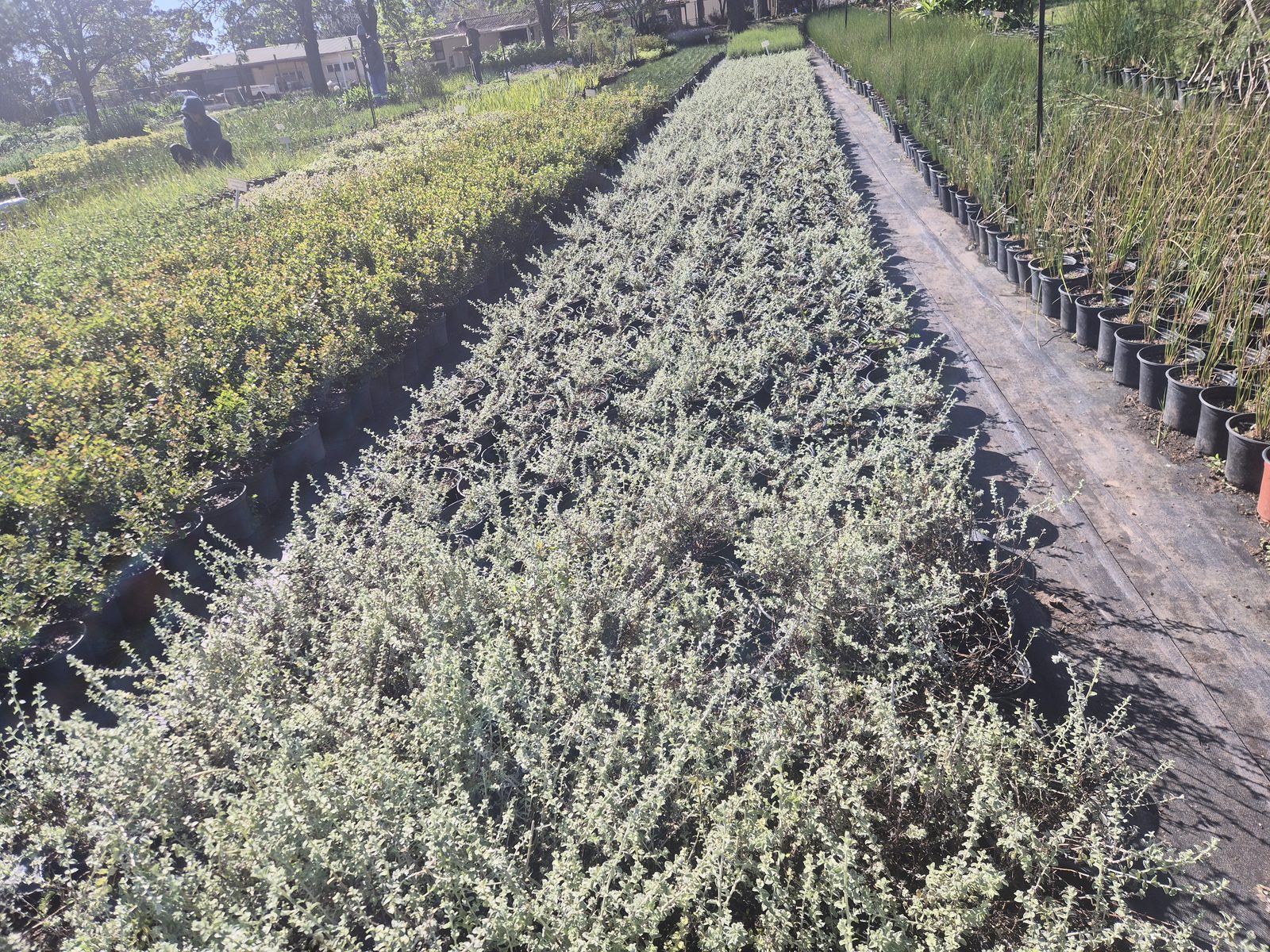
Easy, woolly grey perennial whose tangled stems form a soft mound or groundcover.
What’s in the name: Plecostachys: Greek "plekein", to plait, plus "stachys", spike: a tangle of twisty stems with spiky flower clusters; serpyllifolia: "with leaves like wild thyme".
“I would rather sit on a pumpkin and have it all to myself than be crowded on a velvet cushion.”
— Henry David Thoreau, Walden – Henry David Thoreau, Walden (1854), Project Gutenberg
Available from AVNPlants: see the availability list.
Family
Asteraceae
Conservation status
Least Concern, SANBI Red List of South African Plants
Natural distribution & habitat
Seasonally damp sandy coastal flats from the Western Cape to southern KwaZulu-Natal, usually close to the shore, plus damp lower mountain slopes in the Western Cape.
Size & form
Sprawling, much-branched perennial up to 1 m; all parts grey and woolly.
Flowering
March to May.
Uses in landscaping
- Grey contrast in mixed borders, or massed
- Groundcover or small mounded shrublet
- Coastal gardens; helps stabilise low sandy ground
Care notes
Full sun, well-drained soil with compost each season, summer mulch and regular water. Take soft tip cuttings in autumn, early in the morning, and root in any free-draining mix.
Find out more
Facts checked against: SANBI PlantZAfrica species page 'Plecostachys serpyllifolia'; SANBI Red List of South African Plants, Plecostachys serpyllifolia (P.J.Bergius) Hilliard & B.L.Burtt (assessment 2005/06/30).