Mentha longifolia L.
wild mint · kruisement, balderjan (Afr.)
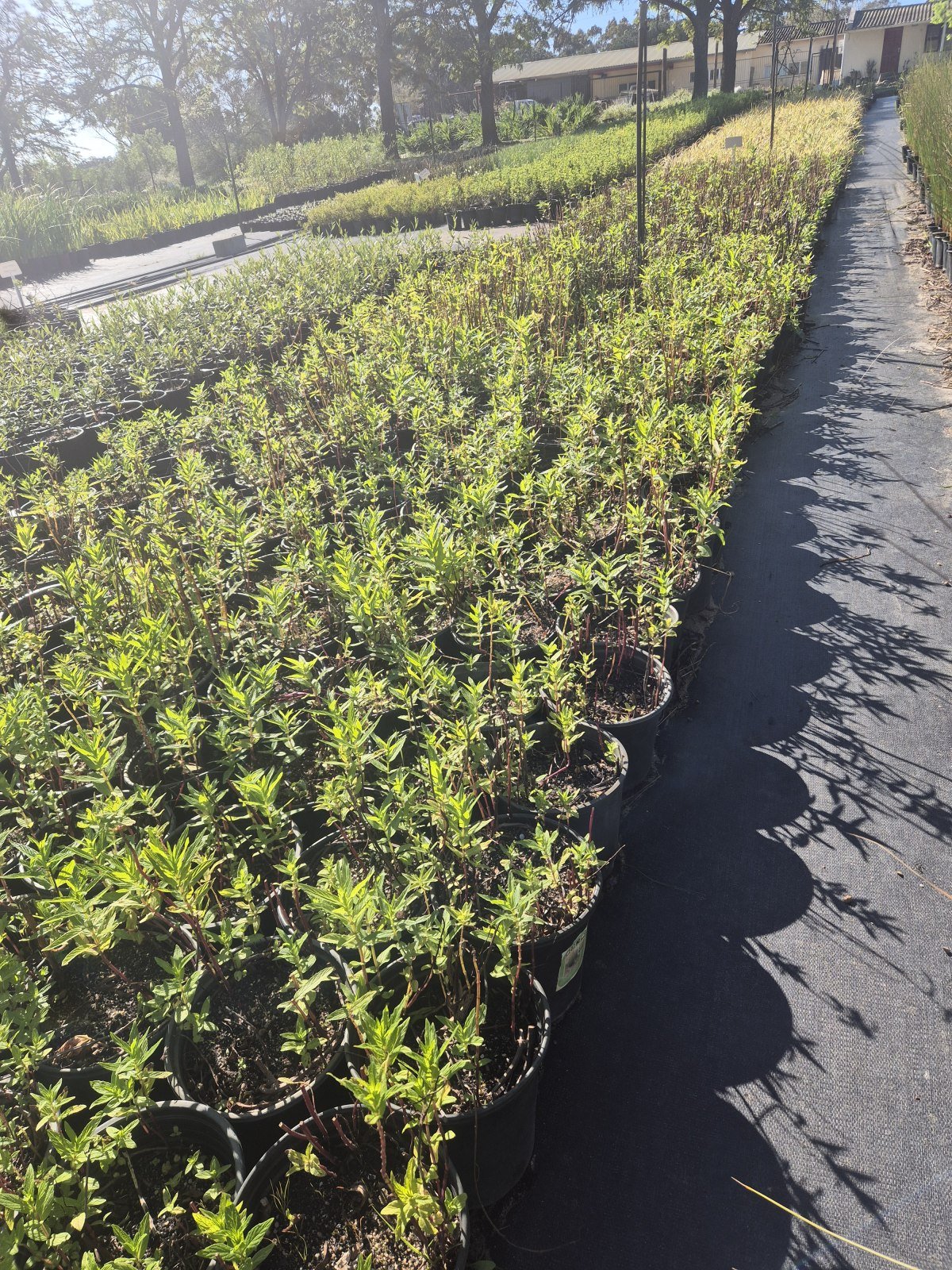
Photo: AVNPlants
Strongly scented wild mint for damp ground, used for centuries in cooking and medicine.
What’s in the name: Mentha: named after Minthe, a nymph of Greek myth; longifolia: "long-leaved".
“Better is a dinner of herbs where love is, than a stalled ox and hatred therewith.”
— Proverbs 15:17 (KJV), The King James Version of the Bible (Project Gutenberg)
Available from AVNPlants: see the availability list.
Family
Lamiaceae
Natural distribution & habitat
Marshes and stream banks from the Cape through Africa to Europe.
Size & form
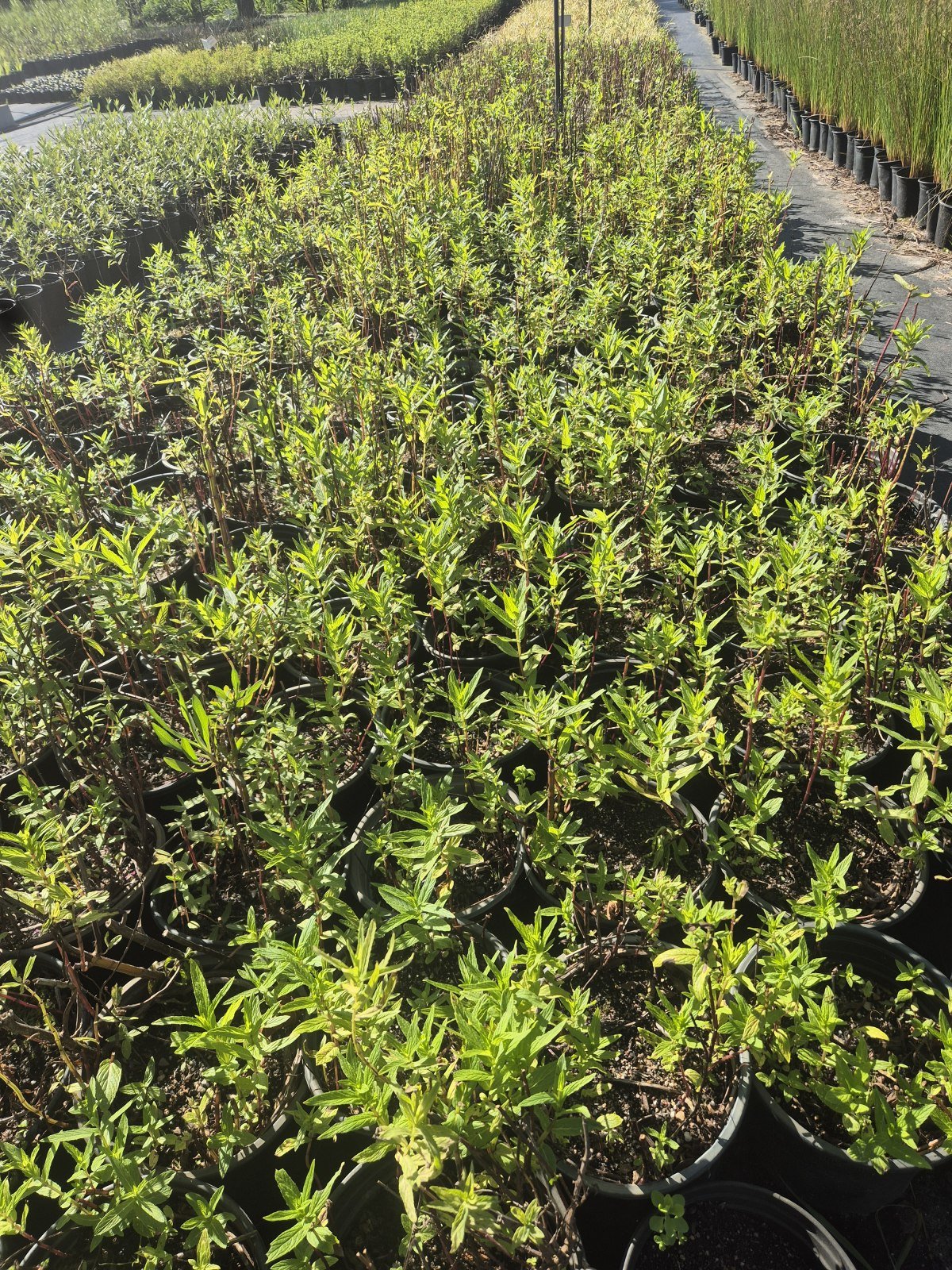
Fast, spreading perennial herb on underground runners, usually 0.5–1 m (up to 1.5 m in good conditions). Soft, narrow, stalkless leaves 45–100 mm long (longifolia means "long-leaved").
Flowering
November to April: white to mauve flowers in long spikes.
Uses in landscaping
- Herb gardens and damp spots
- Pots (useful to contain its spread) – e.g. under a dripping tap
Care notes
Needs lots of water and feeding; sun or semi-shade. In pots, repot into fresh compost-rich soil every year or two. Divide any piece of healthy rootstock, or root young shoots at any time.
Wildlife value
Bees and butterflies visit the flowers.
Find out more
In the garden
Facts checked against: SANBI PlantZAfrica species page 'Mentha longifolia'.