
Freylinia lanceolata (L.f.) G.Don
honey bell-bush, honeybells · heuningklokkiesbos (Afr.)
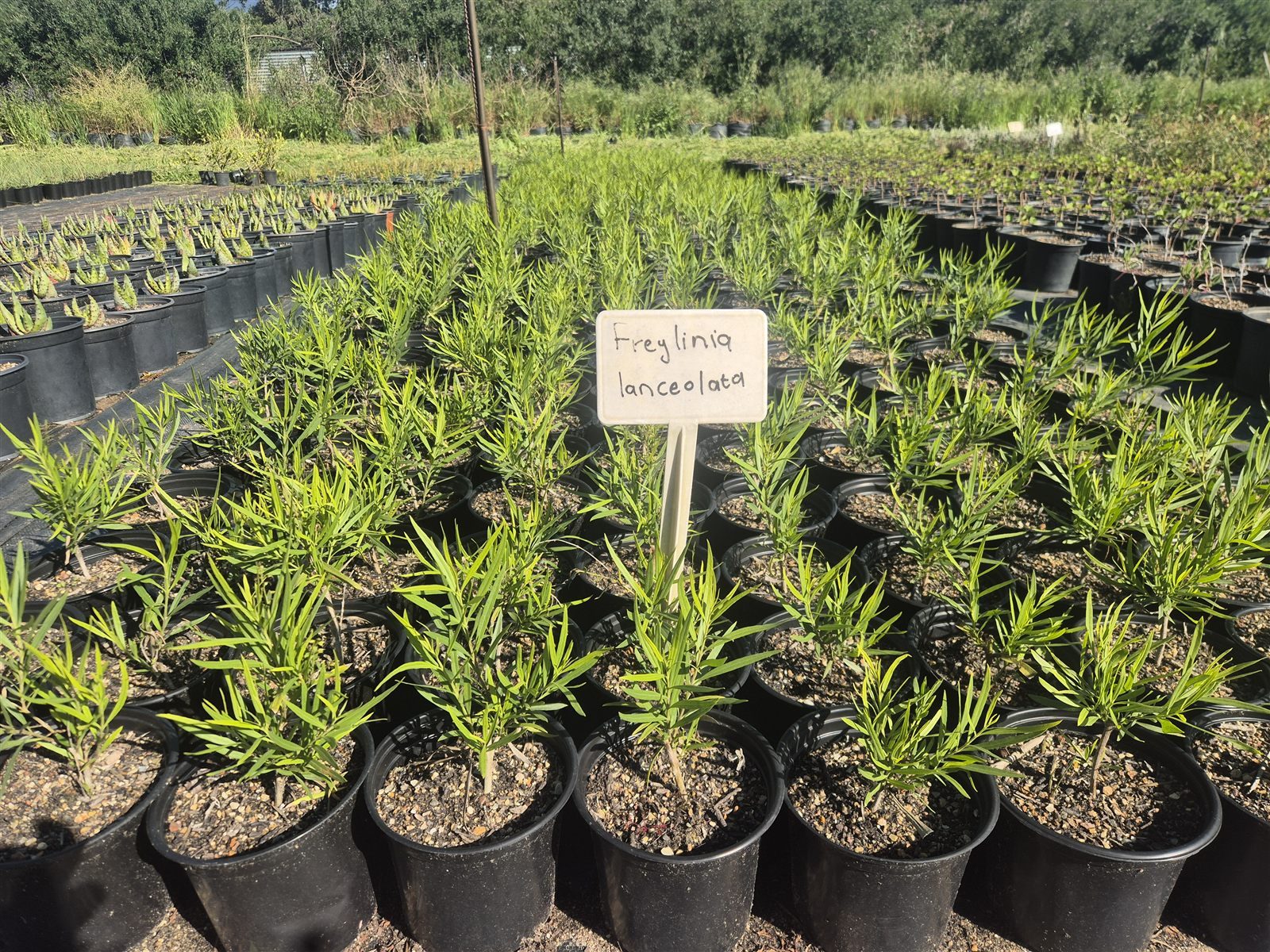
Willowy shrub with honey-scented golden bells over a long season; a magnet for pollinators, best near water.
What’s in the name: Freylinia: honours Count Freylino, who kept a garden near Turin; lanceolata: "lance-shaped".
“he that watereth shall be watered also himself.”
— Proverbs 11:25 (KJV), The King James Version of the Bible (Project Gutenberg)
Available from AVNPlants: see the availability list.
Family
Scrophulariaceae
Conservation status
Least Concern, SANBI Red List of South African Plants
Natural distribution & habitat
Damp places along streams and vlei edges from Namaqualand and Calvinia south and west through the Western Cape to Uitenhage.
Size & form
Usually a multi-stemmed, rather loose evergreen shrub; sometimes a weeping small tree up to about 4.5 m tall and wide, with narrow willow-like leaves.
Flowering
Mainly February to August, with some flowers at other times.
Uses in landscaping
- Dam, pond and stream-bank planting
- Back of an informal border in medium to large gardens
Care notes
Plenty of compost and mulch; water regularly, especially away from water. Prune to keep tidy. Easy from seed (germinates within about three weeks) or from summer stem cuttings.
Wildlife value
Draws many insects, which feed insect-eating birds such as orioles, barbets, robins and thrushes.
Find out more
Facts checked against: SANBI PlantZAfrica species page 'Freylinia lanceolata'; SANBI Red List of South African Plants, Freylinia lanceolata (L.f.) G.Don (assessment 2021/03/03).