
Eriocephalus africanus L.
wild rosemary · wilderoosmaryn, kapokbos (Afr.)
Silvery, aromatic Cape shrub that is smothered in small white flowers and fluffy seed heads (Eriocephalus means "woolly head") in winter.
What’s in the name: Eriocephalus: Greek for "woolly head", for the fluffy seed heads; africanus: "African".
“Season of mists and mellow fruitfulness”
— John Keats, To Autumn – Palgrave, The Golden Treasury (1861), Project Gutenberg
Available from AVNPlants: see the availability list.
Family
Asteraceae
Conservation status
Least Concern, SANBI Red List of South African Plants (assessed as Eriocephalus africanus L. var. africanus)
Natural distribution & habitat
Mainly clay and granite slopes in the Western Cape, Eastern Cape and Namaqualand.
Size & form
Bushy, grey evergreen shrub to about 1 m. Coastal plants have fleshier leaves than inland ones. Deep taproot (up to 6 m) and wide lateral roots.
Flowering
Varies, but the main display is in winter.
Uses in landscaping
- Waterwise: deep roots make it very drought tolerant
- Mass planting or mixed fynbos groups
- Low hedge or clipped shapes
Care notes
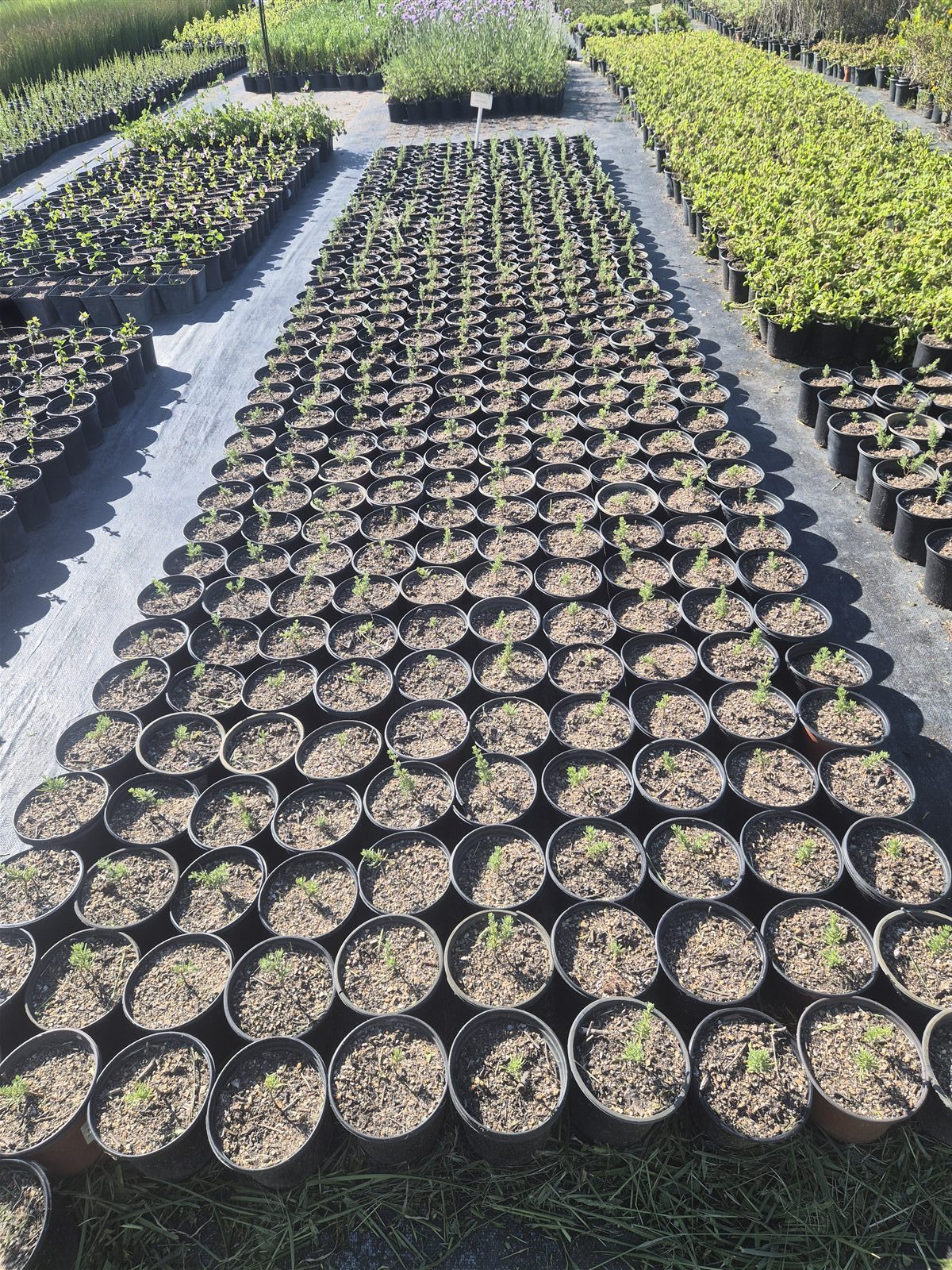
Full sun and well-drained soil; hardy in most of the country. Light pruning keeps it bushy. Easy from cuttings or from seed sown in autumn or spring (germinates in about 10 days).
Wildlife value
Bees visit the flowers on warm days.
Find out more
Facts checked against: SANBI PlantZAfrica species page 'Eriocephalus africanus'; SANBI Red List of South African Plants, Eriocephalus africanus L. var. africanus (assessment 2005/06/30).