Cyperus textilis Thunb.
mat sedge, umbrella sedge · matjiesgoed, kooigoed (Afr.)
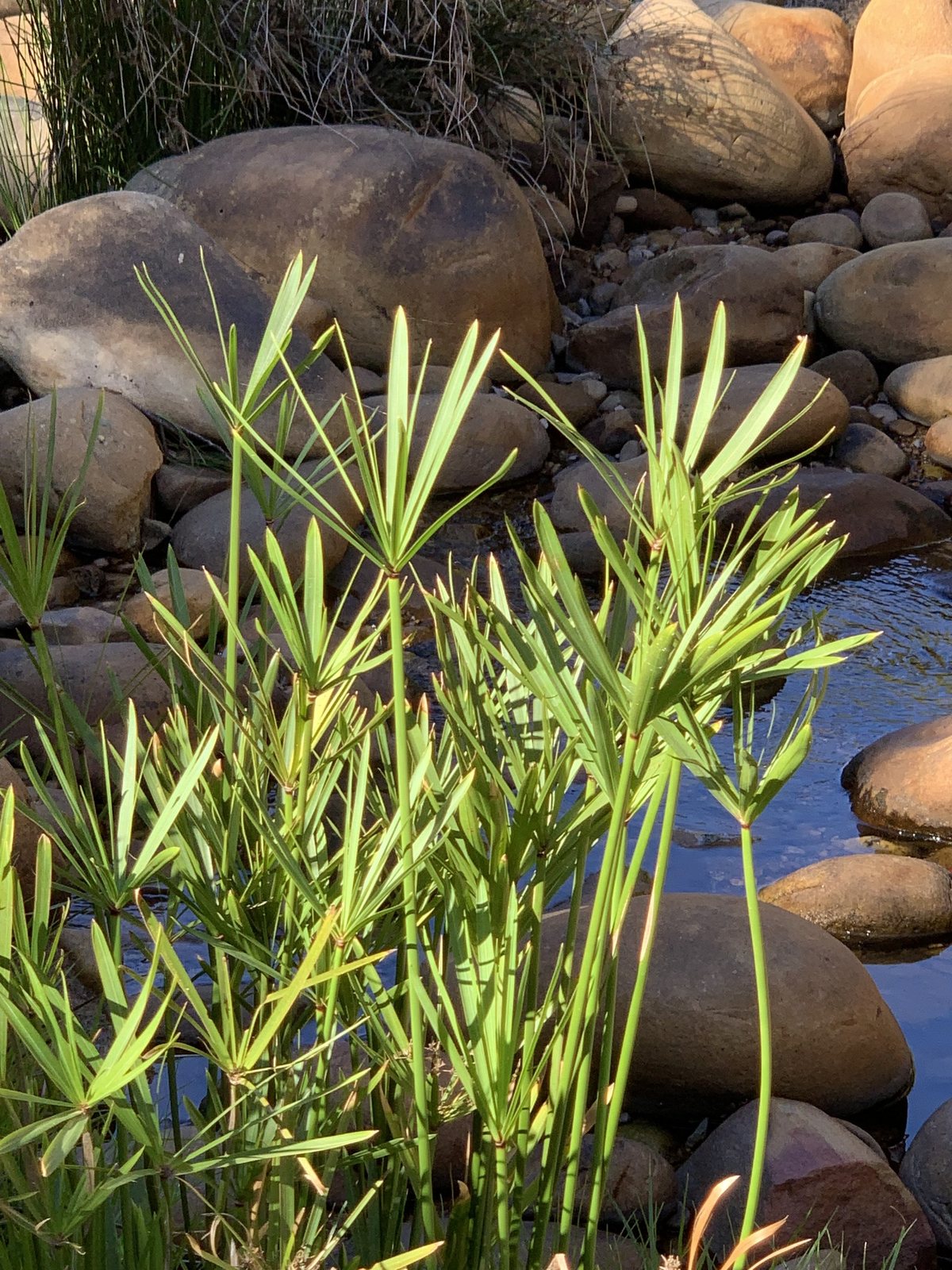
Tall, clump-forming umbrella sedge for pond banks, wet ground and reed-bed water cleaning.
What’s in the name: Cyperus: the ancient Greek name for sedges; textilis: "for weaving".
“thou shalt be like a watered garden, and like a spring of water, whose waters fail not.”
— Isaiah 58:11 (KJV), The King James Version of the Bible (Project Gutenberg)
Available from AVNPlants: see the availability list.
Family
Cyperaceae
Conservation status
Least Concern, SANBI Red List of South African Plants
Natural distribution & habitat
Southern South Africa, from Piketberg (Western Cape) to southern KwaZulu-Natal, beside rivers and streams and in pools, marshes and dams, wet ravines, coastal wetlands and brackish estuaries.
Size & form
Clump-forming perennial sedge. Rounded stems 1–3 m tall, each topped by 10–25 flat, leaf-like bracts radiating like the spokes of an umbrella; spreads by rhizomes/stolons.
Flowering
Late summer (small, branched, greenish flower spikes above the bracts).
Uses in landscaping
- Wetland and pond/stream margins; grows in shallow water or waterlogged soil, and also in normal garden soil
- Reed beds for cleaning polluted water (takes up excess nitrogen and phosphates; removes some heavy metals)
- Accent plant; containers and water features
- Useful for heavy clay and seasonally wet or boggy areas
Care notes
Easy. Sun or shade: compact in bright sun, taller with fewer stems in shade. Frost kills the foliage but the plant resprouts in spring if roots are not frozen (survives to about −7 °C). Propagate by division (keep young outer growth), seed, or stem-top "umbrella" cuttings in water. No significant pests or diseases.
Wildlife value
Finches and weavers nest in the clumps; provides shelter for fish larvae and other water-side animals.
Find out more
Facts checked against: SANBI PlantZAfrica species page 'Cyperus textilis'; SANBI Red List of South African Plants, Cyperus textilis Thunb. (assessment 2006/05/17).