Cyperus papyrus L.
papyrus · papirus (Afr.)
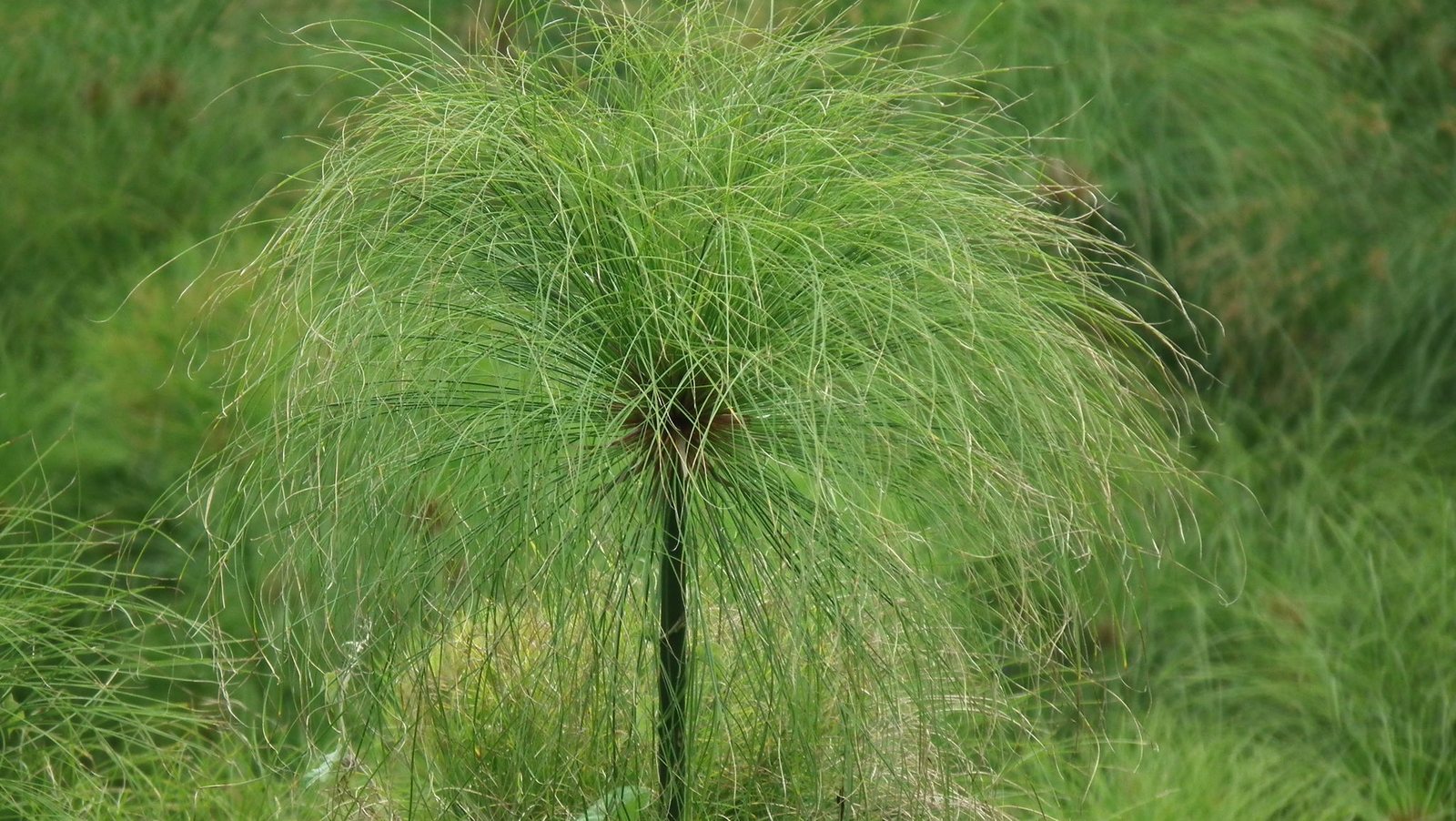
The giant papyrus sedge: tall green stems topped with feather-duster heads, for large water bodies.
What’s in the name: Cyperus: the ancient Greek name for sedges; papyrus: the Greek name for the paper plant.
“she took for him an ark of bulrushes, and daubed it with slime and with pitch, and put the child therein; and she laid it in the flags by the river's brink.”
— Exodus 2:3 (KJV), The King James Version of the Bible (Project Gutenberg)
Available from AVNPlants: see the availability list.
Family
Cyperaceae
Conservation status
Least Concern, SANBI Red List of South African Plants
Natural distribution & habitat
Swamps and lake edges across Africa, Madagascar and the Mediterranean. In southern Africa only in warm, low-lying areas: KwaZulu-Natal, Mpumalanga, Limpopo, Botswana and Namibia.
Size & form
Smooth, round stems as thick as 40 mm near the base reaching 5 m where conditions are ideal.
Uses in landscaping
- Large ponds and dams in full sun, as a colony
Care notes
Plant in mud or sand under at least about 0.5 m of water so tall stems stay upright. Full sun, sheltered from strong wind. Divide rhizomes in spring; seed is not recommended.
Wildlife value
Flower heads are used for nesting by many colonial birds. Wind-pollinated.
Find out more
Facts checked against: SANBI PlantZAfrica species page 'Cyperus papyrus'; SANBI Red List of South African Plants, Cyperus papyrus L. (assessment 2006/05/22).