
Coleus neochilus (Schltr.) Codd
formerly Plectranthus neochilus
smelly coleus, blue coleus · rotstuinsalie (Afr.)
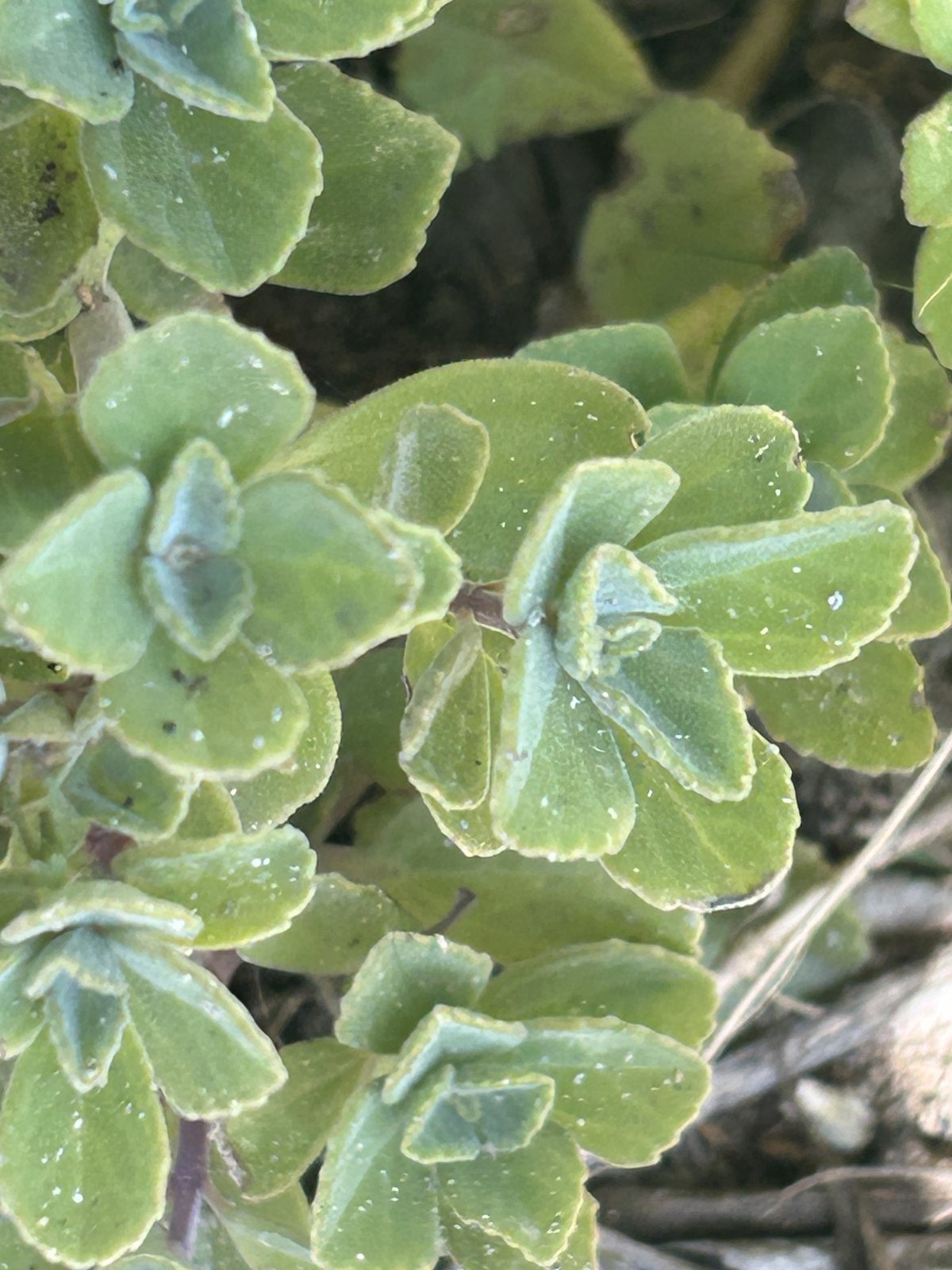
Aromatic, succulent groundcover with blue-purple flower spikes; thrives in hot, dry sites and in light shade.
What’s in the name: Coleus: from the Greek for "sheath", as the stamens are joined in a little tube; neochilus: Greek for "new lip", borrowed from the old genus Neochilus and its big lower petal-lip.
“We need the tonic of wildness”
— Henry David Thoreau, Walden – Henry David Thoreau, Walden (1854), Project Gutenberg
Available from AVNPlants: see the availability list.
Family
Lamiaceae
Conservation status
Least Concern, SANBI Red List of South African Plants
Natural distribution & habitat
Dry thicket, open rocky woodland, grassland and bushveld in North West, Limpopo, Gauteng, Mpumalanga, KwaZulu-Natal and the Eastern Cape, and neighbouring countries north to Zambia.
Size & form
Bushy, sprawling to upright succulent herb 20–50 cm tall and up to about 60 cm wide, with grey-green, slightly sticky, toothed leaves.
Flowering
September to April, peaking in autumn.
Uses in landscaping
- Waterwise groundcover or bedding plant
- Erosion control on steep, difficult slopes
- Containers
Care notes
Best flowering in sun; tolerates light shade. Loam to sandy, well-drained soil and little water – recovers quickly after drought stress. Light frost only. Softwood cuttings root easily, even in place.
Wildlife value
Carpenter bees, other bees and flying insects visit the flowers.
Find out more
Facts checked against: SANBI PlantZAfrica species page 'Coleus neochilus'; SANBI Red List of South African Plants, Plectranthus neochilus Schltr. (assessment 2005/06/30).