Carpobrotus acinaciformis (L.) L.Bolus
sour fig, Hottentot fig · elandsvy, goenavy (Afr.)
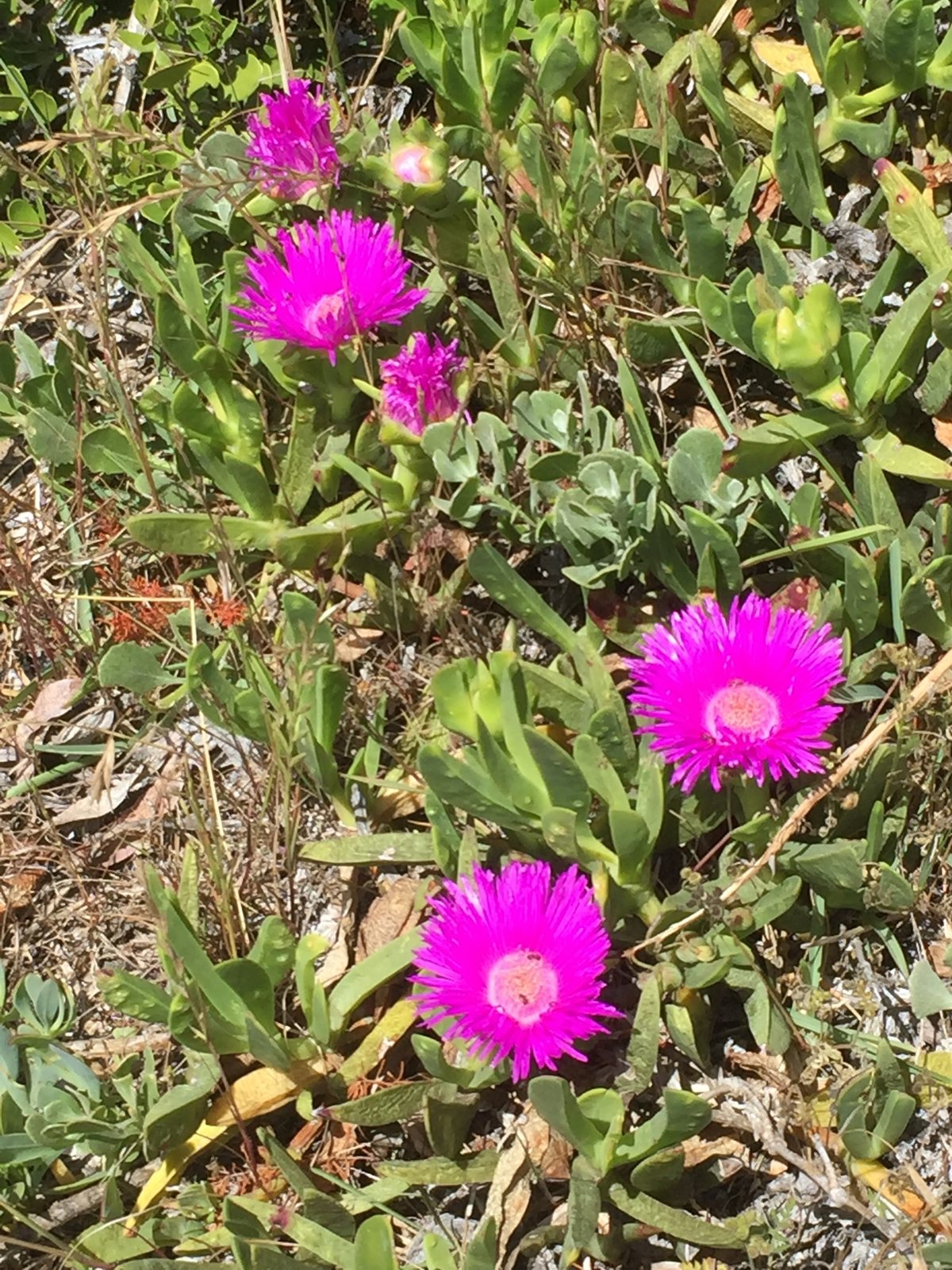
Vigorous sour fig of Western Cape dunes: dense succulent mats with large magenta-purple flowers in spring.
What’s in the name: Carpobrotus: Greek for "edible fruit"; acinaciformis: "scimitar-shaped", for the curved leaves.
“the desert shall rejoice, and blossom as the rose.”
— Isaiah 35:1 (KJV), The King James Version of the Bible (Project Gutenberg)
Available from AVNPlants: see the availability list.
Family
Aizoaceae
Conservation status
Least Concern, SANBI Red List of South African Plants
Natural distribution & habitat
Endemic to the Western Cape, Saldanha to Mossel Bay, on coastal dunes, sandy cliffs, beaches and Cape Flats sand fynbos. Caution: it has become invasive in Mediterranean-climate regions abroad, so plant it only within its natural range.
Size & form
Low, mat-forming succulent with trailing stems up to 2 m that root as they go; fleshy, sabre-shaped leaves (acinaciformis means "scimitar-shaped"), often red-edged. Flowers 70–100 mm across.
Flowering
August to December.
Uses in landscaping
- Sand binder for slopes and erosion-prone ground
- Waterwise gardens
- Trailing over retaining walls; large hanging baskets
Care notes
Full sun and good drainage; avoid overwatering, which causes rot. Dry cuttings off before planting; seed germinates in 7–10 days in mild weather.
Wildlife value
Honeybees and other insects visit the flowers; people and animals eat the fruit and spread the seed.
Find out more
Facts checked against: SANBI PlantZAfrica species page 'Carpobrotus acinaciformis'; SANBI Red List of South African Plants, Carpobrotus acinaciformis (L.) L.Bolus (assessment 2005/06/08).