Anisodontea scabrosa (L.) Bates
rough-leaf African mallow, sand rose · sandroos, pienk-kiesieblaar (Afr.)
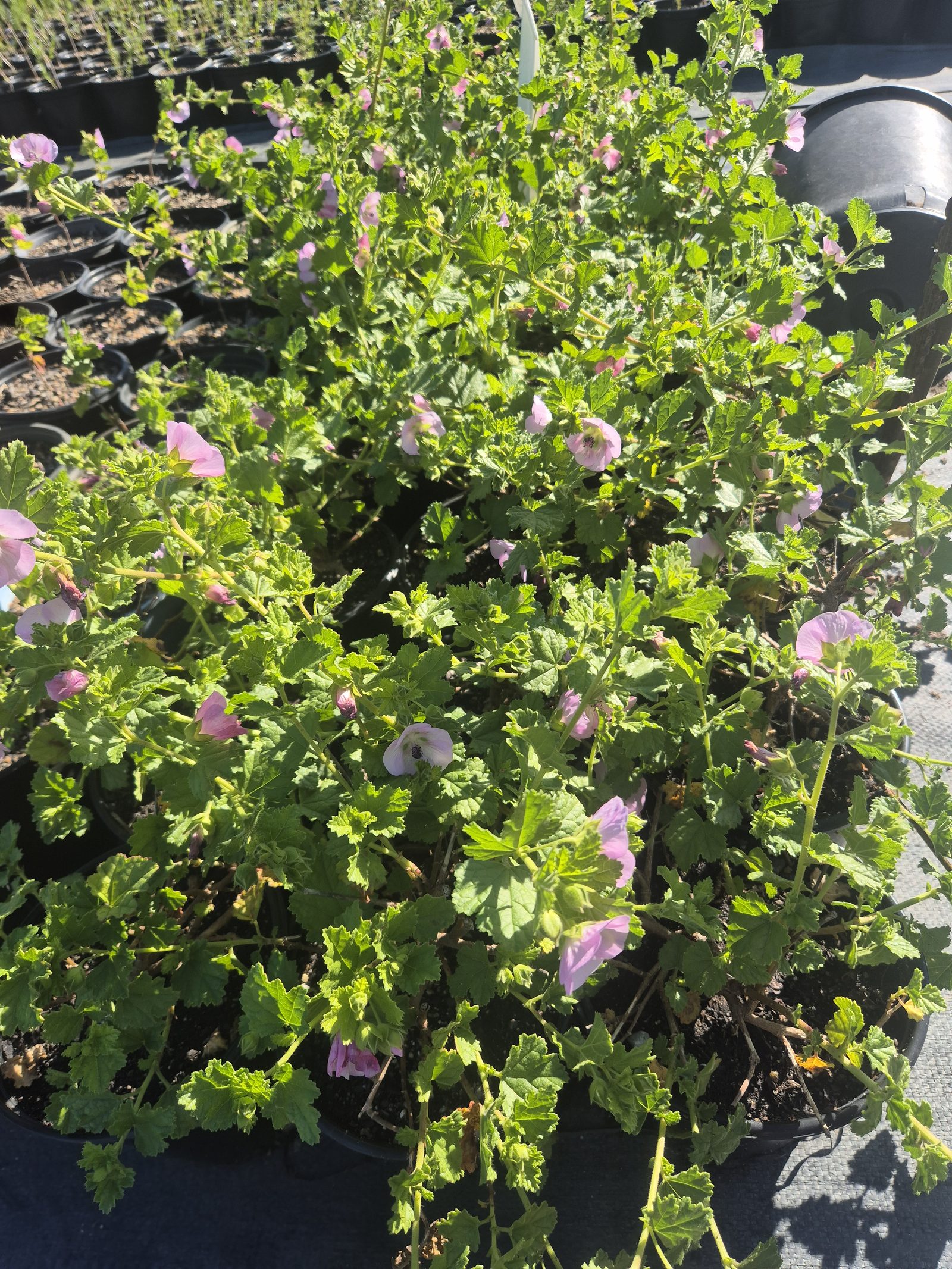
Cheerful pink-flowered mallow shrub that blooms almost all year; tough on the coast and frost-hardy.
What’s in the name: Anisodontea: Greek for "unequal teeth"; scabrosa: "rough".
“To the attentive eye, each moment of the year has its own beauty”
— Ralph Waldo Emerson, Nature – Ralph Waldo Emerson, Nature (1836), Project Gutenberg
Available from AVNPlants: see the availability list.
Family
Malvaceae
Conservation status
Least Concern, SANBI Red List of South African Plants
Natural distribution & habitat
Winter-rainfall coast: Saldanha Bay, round the Peninsula, and on to the Eastern Cape and KwaZulu-Natal. Sunny, sheltered bushy places, often on disturbed ground and mostly on low-lying coastal sands.
Size & form
Evergreen shrub of variable size, up to 2–3 m. Leaves 20–70 mm, often three-lobed and toothed; plant is sticky with a tar-like smell. Pink, hibiscus-like flowers 20–25 mm across.
Flowering
Through the year, peaking September to December.
Uses in landscaping
- Informal flowering hedge
- Coastal gardens: withstands coastal conditions and frost
- Warm, sunny, airy spots in well-drained soil
- Takes clipping beautifully: some nurseries shape it into lovely topiaries such as lollipop standards (in our experience)
Care notes
Best flowering in full sun; tolerates light shade. Use sandy, well-drained soil. Sow seed in autumn, or take semi-hard tip/stem cuttings in spring and summer. Keep air moving around plants to avoid whitefly.
Wildlife value
Honeybees and carpenter bees visit the flowers; the sticky, tarry foliage is thought to deter grazers and insects.
Find out more
Facts checked against: SANBI PlantZAfrica species page 'Anisodontea scabrosa'; SANBI Red List of South African Plants, Anisodontea scabrosa (L.) Bates (assessment 2005/06/30).