Aloe arborescens Mill.
krantz aloe · kransaalwyn (Afr.)
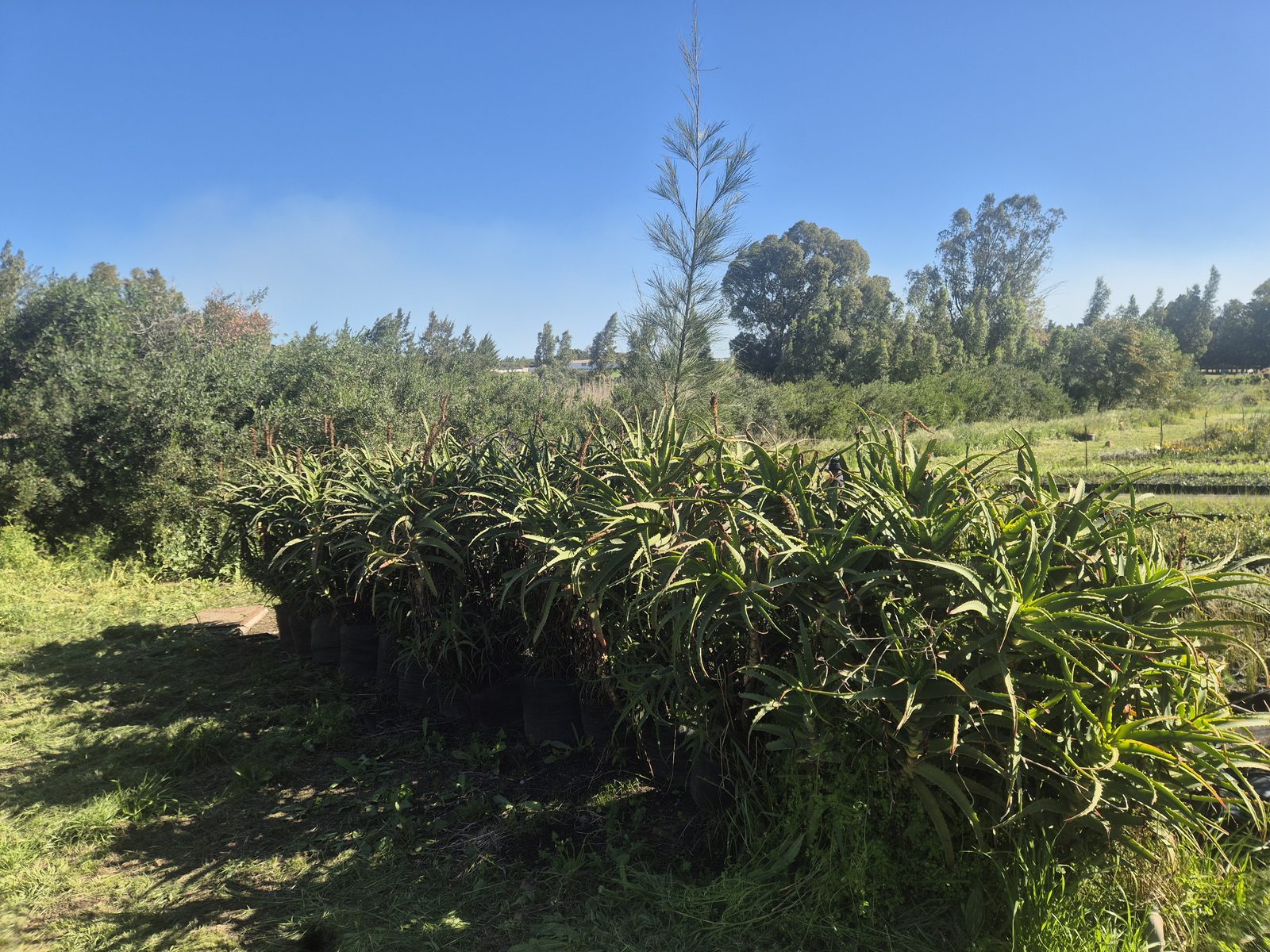
Fast, easy, multi-headed aloe with orange (sometimes yellow or bicoloured) winter flower spikes; makes a dense, spiny hedge.
What’s in the name: Aloe: an ancient name for these plants, passed down through Greek and Latin; arborescens: "becoming tree-like".
“If Winter comes, can Spring be far behind?”
— Percy Bysshe Shelley, Ode to the West Wind – Palgrave, The Golden Treasury (1861), Project Gutenberg
Available from AVNPlants: see the availability list.
Family
Asphodelaceae
Conservation status
Least Concern, SANBI Red List of South African Plants
Natural distribution & habitat
One of the most widespread aloes: from the Cape Peninsula east along the coast, through KwaZulu-Natal, Mpumalanga and Limpopo, and north to Mozambique, Zimbabwe and Malawi. Found from sea level to mountain tops, mostly on exposed ridges and rocky outcrops, sometimes in dense bush.
Size & form
Branched, multi-headed shrub about 2–3 m tall (arborescens means "becoming tree-like"), with rosettes of grey-green leaves edged with pale teeth.
Flowering
Winter (May to July). Mostly deep orange; yellow and orange-and-yellow forms also occur.
Uses in landscaping
- Waterwise: once settled it copes with drought and neglect
- Accent or feature plant
- Barrier hedge – dense and well armed
Care notes
Full sun and well-drained soil improved with compost. Handles moderate frost but not severe frost. Very easy from cuttings: let the cut end dry for a day or two, plant in sandy, free-draining soil and keep on the dry side to avoid rot. Seed can be sown in spring.
Wildlife value
Nectar for sunbirds and many other birds in winter; bees also visit.
Find out more
Facts checked against: SANBI PlantZAfrica species page 'Aloe arborescens'; SANBI Red List of South African Plants, Aloe arborescens Mill. (assessment 2018/10/31).